Building Your Credit Score
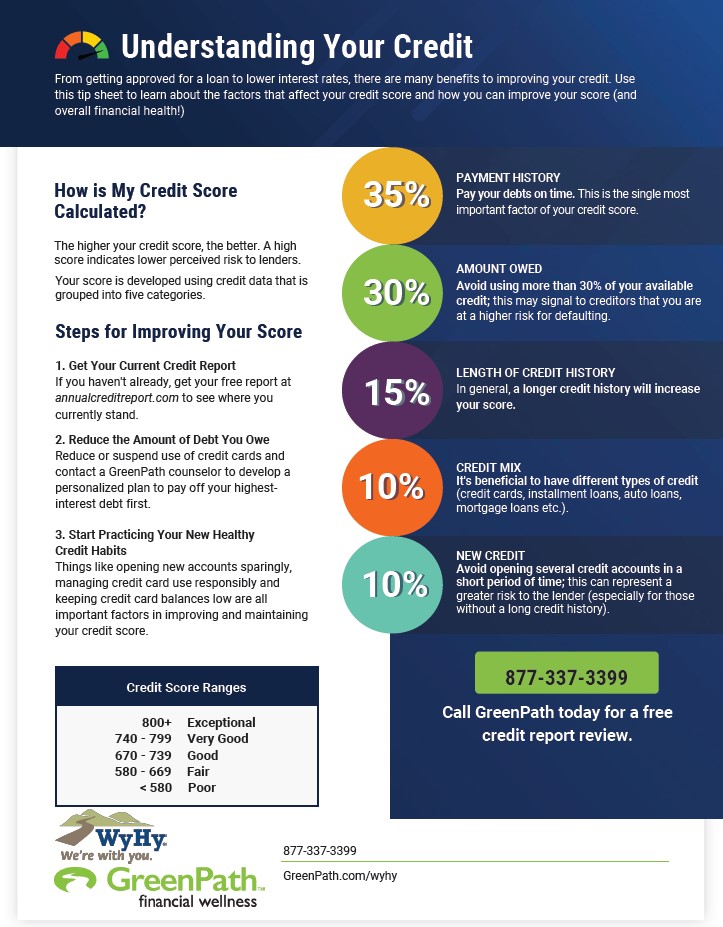
What Goes Into Your Credit Score
Think of your score as a pie made up of five slices:
-
Payment History (35%)
-
Your payment history has the biggest impact on your score. Paying bills on time consistently helps build strong credit, while missed or late payments can lower your score.
-
- Amount Owed (30%)
- This measures how much of your available credit you are using. Keeping balances low compared to your credit limits shows lenders you are using credit responsibly.
- A common guideline is to stay below 30% of your available credit, but lower is often better.
- This measures how much of your available credit you are using. Keeping balances low compared to your credit limits shows lenders you are using credit responsibly.
-
Length of Credit History (15%)
- The longer your credit accounts have been open, the more history lenders can review. Building credit early and keeping older accounts open can help over time.
-
Credit Mix (10%)
- Having a healthy mix of credit types, like credit cards, auto loans, or student loans, can positively impact your score.
-
New Credit (10%)
- Opening several accounts in a short period of time may signal risk to lenders. Applying for credit thoughtfully and only when needed is a smart approach.
The 30% Rule
One of the easiest ways to maintain a healthy credit score is by managing your credit utilization.
Credit utilization is the percentage of your available credit that you are currently using.
For example:
- Credit limit: $1,000
- Recommended balance: Under $300
Using too much of your available credit can make lenders think you may be financially stretched, even if you are making payments on time.
Keeping your balances low shows you are managing credit responsibly and can help improve your score over time.
Tip: While staying under 30% is a solid goal, many people with excellent credit keep utilization under 10%.
Steps to Start Building Credit
1. Check Your Credit Regularly
WyHy members can access their credit score for free through SavvyMoney in digital banking or the WyHy app.
SavvyMoney helps you:
- Monitor your credit score
- Track changes to your credit
- Understand what impacts your score
- Explore ways to improve your financial health
It is like having a built-in financial wellness tool right at your fingertips.
2. Use Credit Wisely
If you get a credit card, start small.
Using your card for everyday purchases like gas or groceries and paying the balance in full each month can help you build positive credit habits early.
3. Practice Good Financial Habits Early
- Avoid opening too many accounts at once
- Pay every bill on time
- Monitor your spending regularly
- Keep balances manageable
- Review your credit report for errors or suspicious activity
Building credit takes time, but every smart financial decision adds up.
Whether you are opening your first checking account, getting your first credit card, or preparing for future goals like buying a car or home, learning how credit works now can help set you up for long-term success.
Good credit can open doors to better rates, more opportunities, and greater financial confidence.